What Every Private School Owner in Nigeria Should Know About SUBEB Compliance
The Letter Arrives on a Tuesday.
You're in a staff meeting when your secretary knocks and hands you an envelope. The letterhead is from the State Universal Basic Education Board. Your school is scheduled for an inspection next week.
Your stomach drops.
Not because you've done anything wrong, you haven't. But because you know, in that honest part of your mind that you don't always visit, that your records are not exactly where they should be. The attendance register for one class has been missing since last term. Two of your newer teachers haven't completed their documentation. The school's annual returns, the ones you were supposed to submit three months ago, are still sitting in a draft folder somewhere on the vice principal's laptop.
Seven days. That's what you have.
Does any version of this story feels familiar?
First, What Exactly Is SUBEB?
The State Universal Basic Education Board (SUBEB) is the government body responsible for overseeing basic education at the state level in Nigeria. Every state has its own SUBEB, operating under the framework of the Universal Basic Education Commission (UBEC) at the federal level.
For private school owners running primary or junior secondary schools, SUBEB is not just a government agency you register with once and forget. It is an active regulatory body that monitors, inspects, and evaluates schools on an ongoing basis. Meeting SUBEB requirements is not optional, and the consequences of failing an inspection or operating out of compliance range from warnings and fines to school closure.
The challenge is that many proprietors, especially those who are new to running schools or who expanded quickly, don't fully understand what compliance actually requires. They know it's important. They just don't always know exactly what it means in practice.
What SUBEB Is Looking For When They Visit
SUBEB inspections vary somewhat from state to state, but across Nigeria, inspectors typically assess a core set of things. Knowing what they're looking for is half the battle.
School registration and approval documents. Your school must be registered and approved by the state Ministry of Education and SUBEB. These documents should be current, accessible, and displayed where required. If your approval was granted three years ago and you've since expanded your school, added a new arm, new classes, or a new campus, that expansion may require separate approval.
Teacher qualifications and credentials. Every teacher in your school should hold the appropriate qualifications for the level they are teaching. NCE (Nigeria Certificate in Education) is the minimum requirement for primary school teachers. Inspectors will ask to see certificates, and unqualified staff on your payroll can result in a serious compliance failure.
Pupil-to-teacher ratio. SUBEB guidelines specify acceptable ratios of students to teachers. A class of 70 students with one teacher is both a welfare concern and a compliance red flag. Inspectors look at this.
School records and registers. Attendance registers, admission books, staff records, and other required documentation must be up to date, properly maintained, and available for inspection. Schools that cannot produce accurate records during a visit, even if the records exist somewhere, struggle in the inspection process.
Infrastructure and safety standards. The physical condition of your school matters. Classrooms, toilets, ventilation, drinking water, and basic safety provisions are assessed. A beautiful school with poor sanitation facilities can still fail on this criteria.
Annual returns. SUBEB requires schools to submit annual returns, data about enrolment, staffing, and school performance. Missing or late submissions raise flags about a school's seriousness and record-keeping culture.
The Records Problem (And Why It Trips Schools Up)
Here's where most schools get into trouble, not through outright neglect, but through disorganization.
A proprietor who genuinely cares about their school can still fail a SUBEB inspection simply because the right document isn't in the right place at the right time. The attendance register is complete but stored in a way that makes it hard to retrieve. The teacher credentials are all correct but filed without a proper system. The annual returns data is accurate but was never formally submitted.
SUBEB inspectors are not trying to catch you doing something wrong. But they are looking for evidence that your school is being run professionally and systematically. When records are scattered, missing, or incomplete, it sends a signal, even if unintentional, that the school lacks the rigour to be trusted with children's education.
The schools that pass inspections consistently are usually not the ones with the fanciest buildings. They're the ones where the records are clean, the staff files are complete, the registers are current, and the person in charge of administration can put their hand on any document within minutes.
That level of organization doesn't happen by accident. It happens when a school has invested in proper record management and in many cases today, that means going digital.
How Digital Systems Help With Compliance
One of the most underappreciated benefits of using a school management platform is how much easier it makes compliance. When your student records, attendance data, staff information, and financial records are all stored digitally and maintained in real time, the work of preparing for an inspection becomes significantly lighter.
Instead of three people frantically pulling files together for seven days before the inspectors arrive, your records are already in order because they're maintained continuously, not in a panic.
SchoolsFocus gives schools a full information and records management system, digital student files, staff records, attendance tracking, and financial data all in one place. When an inspection is scheduled, you're not starting from scratch. You're pulling from a system that's been running properly all term.
That's not just convenience. In a compliance context, it's protection.
Practical Steps to Stay SUBEB-Compliant Year-Round
Rather than scrambling before every inspection, here's how to build compliance into the way your school runs:
Keep your registration documents current and know their renewal timelines. Set a reminder well before any expiry date so you're never caught with lapsed approvals.
Maintain a staff file for every teacher and staff member that includes their credentials, appointment letter, and any professional development records. Review these files at the start of every academic year.
Submit your annual returns on time, every year. Don't wait until SUBEB sends a reminder. Treat it as a calendar event, same as publishing results or opening a new term.
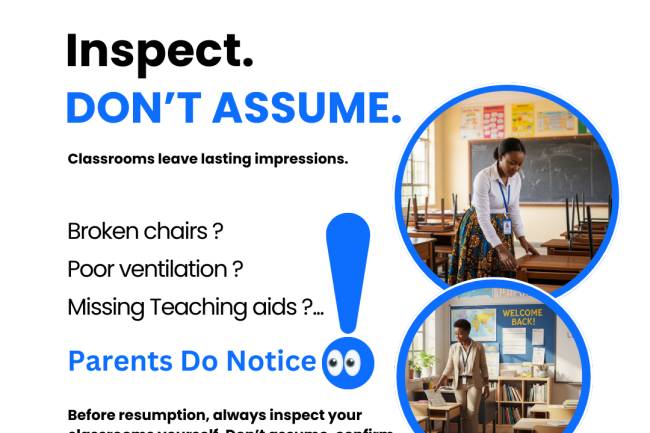
Conduct your own internal "inspection" once a term. Walk through your school the way an inspector would. Check the registers. Check the classrooms. Check the toilets. Identify what's out of order before someone else does.
Build a relationship with your zonal SUBEB office. This sounds simple, but proprietors who know their local education officers and maintain respectful, proactive communication are far less likely to be blindsided by surprise visits or new requirements.
The Bigger Picture
Compliance is not the enemy of a good school. In fact, the habits that make a school SUBEB-compliant, proper records, qualified staff, organized administration, consistent reporting — are the same habits that make a school genuinely excellent.
The proprietors who resent compliance are usually the ones who haven't yet built the systems to make it easy. Once the systems are in place, compliance stops feeling like a burden and starts feeling like confirmation that you're running your school the right way.
You built your school to make a difference. SUBEB compliance isn't a threat to that. It's the baseline that protects it.
If you'd like to see how SchoolsFocus can help you keep your records inspection-ready all year round, visit www.schoolsfocus.net or send a WhatsApp message to 08056176947.
An inspection is not something to fear. It's something to be ready for, all the time.

Leave a Reply
-


Safeguarding Student Data: Security and Data Privacy in...
-


Centralized Data Management: Streamlining School Operations...
-


Training your Students for the Future
-

10 Back to School Tips for Parents: How to Prepare Your...
-


Staying Up to Date in Your Profession as an Educator: The...
-


Collaboration: A Framework for an Effective School Management